Product guides
School leadership playbook for school management, ERP, and SIS
A school leadership playbook for turning a management software decision into an owned, measured, and phased operating change.
Reviewed by Sarah, Marketing Manager at Schoolyi, on Monday, August 31, 2026. Checked: Copy, structure, documentation links, and release readiness.
Leadership owns the boundary
A useful way to approach school leadership playbook for school management software is this: Give school leaders a governance playbook that connects strategy, proof, ownership, calendar, and measured rollout.
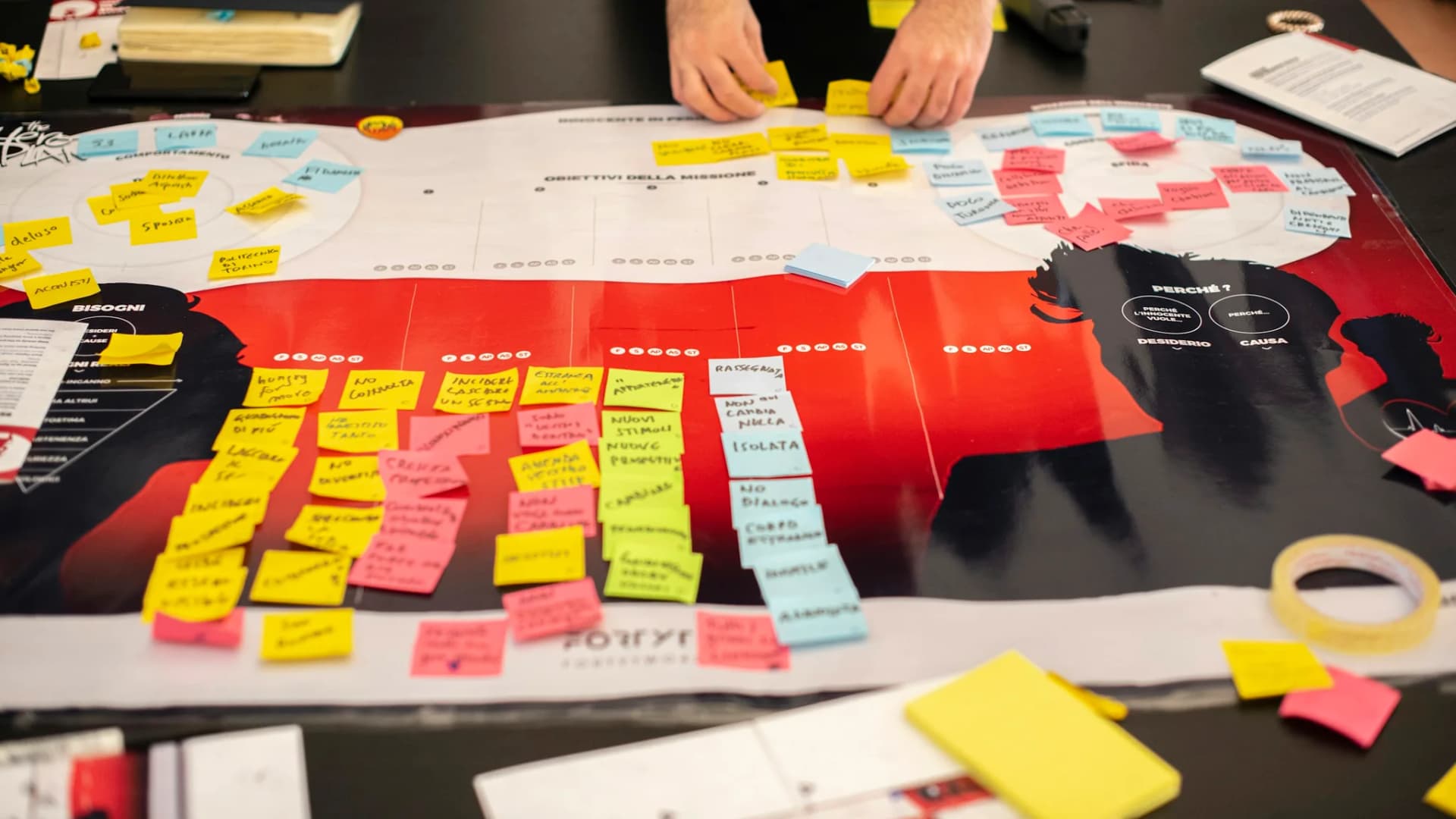
A leadership team does not need to configure every workflow, but it must decide what the school is trying to improve, what phase one includes, who owns the decisions, and what evidence is required before launch. Without that boundary, the project grows through individual requests.
Start with the school’s context: campuses, grades, boarding or day model, academic calendar, staffing, family expectations, existing systems, and legal obligations. A platform decision without this context is too abstract to govern.
Play 1: choose the first outcome
Pick an outcome that crosses teams and can be observed. Examples include a dependable admissions-to-roster handoff, a reconciled fee process, or a controlled assessment publishing workflow. Define what success looks like, who measures it, and what must remain safe while the change is underway.
Do not use unsupported savings, adoption, or student-outcome claims to create urgency. State hypotheses as hypotheses and plan the measurement that could confirm or reject them.
Play 2: appoint owners and decision rights
Name the executive sponsor, project owner, workflow owners, data owners, access owner, implementation contact, training owner, and go-live approver. Write who recommends, approves, must be consulted, and is informed for scope, access, data, and release decisions.
A leader should resolve conflicts between speed and control. If a faster workflow expands access or weakens reconciliation, the trade-off needs an explicit decision rather than an informal shortcut.
Play 3: demand proof in demonstrations
Give vendors the same scenarios and score evidence. Ask them to distinguish what works now, what requires configuration, what depends on integration, what remains manual, and what is only roadmap. Require a negative case as well as a successful one.
The result should be a decision record with requirements, evidence, risks, commercial assumptions, unresolved questions, and conditions of approval.
Play 4: govern the data
The U.S. Department of Education data governance resources describe a lifecycle that includes acquisition, use, access, quality, sharing, security, disposal, and monitoring. Use the lifecycle to ask who owns each important record and how the school will validate it.
For privacy and security, involve the appropriate school advisers early. GOV.UK procurement guidance recommends checking responsibilities, access control, security measures, subprocessors, incident handling, and data return or deletion. The school’s jurisdiction determines the final legal review.
Play 5: tie the plan to the calendar
Place migration, training, testing, communication, and go-live against the academic calendar. Avoid treating examinations, admissions peaks, fee cycles, holidays, and term transitions as ordinary dates. Define a hold rule for critical identity, permission, payment, assessment, or family-visibility failures.
Play 6: review the first phase
At 30, 60, and 90 days, review adoption, corrections, support questions, access exceptions, engaged use, qualified organic or operational demand where relevant, and the intended outcome. Expand when evidence supports it, hold when it does not, and consolidate rather than adding competing workflows.
Leadership’s job is not to declare the project successful early. It is to make the next decision more informed than the last one.
Use a simple review pack: the original outcome, baseline, observed result, unresolved risks, owner feedback, family or staff questions, and the recommended next action. This keeps the review focused on evidence and makes a hold or consolidation decision explainable.
Ask the leadership team to record what evidence would change its recommendation. A review is stronger when it identifies the conditions for expanding, narrowing, or stopping the next phase.
Choosing a whole-school platform for school leadership playbook for school management software
For a school evaluating school leadership playbook for school management software, the useful test is whether the workflow has a clear owner, a shared record, and a next step that can be measured. Use one calendar and one roster to coordinate the school year across teams.
The failure worth guarding against here is buying by module count, then discovering the modules do not share a calendar or a roster. Decide what the student record and the academic calendar is, and hold every candidate to it.
Bring one real workflow for school leadership playbook for school management software into every evaluation. Record what is native, configured, integrated, manual, deferred, or still unknown.
- Ask each vendor to trace one student end to end in the demo.
- Watch for the point where they switch screens or re-enter data.
- Confirm term dates come from one calendar, not per module.
A practical decision on school leadership playbook for school management software
Use the school leadership playbook for school management software decision as a workflow question, not a feature-count exercise.
Take one real scenario from your own school into every demo and insist it is performed rather than described. A vendor who cannot do it live will not do it in production either.