
Build can be right
A capable internal team with unusual requirements may rationally build; it should still budget for long-term operations.
Buyer comparison
Use a practical decision framework for building custom school workflows versus adopting and configuring a maintained platform. See the workflow, ownership, rollout sequence, and boundaries before choosing a school management platform.

Scope enrollment, modules, and implementation with the people who own the budget.
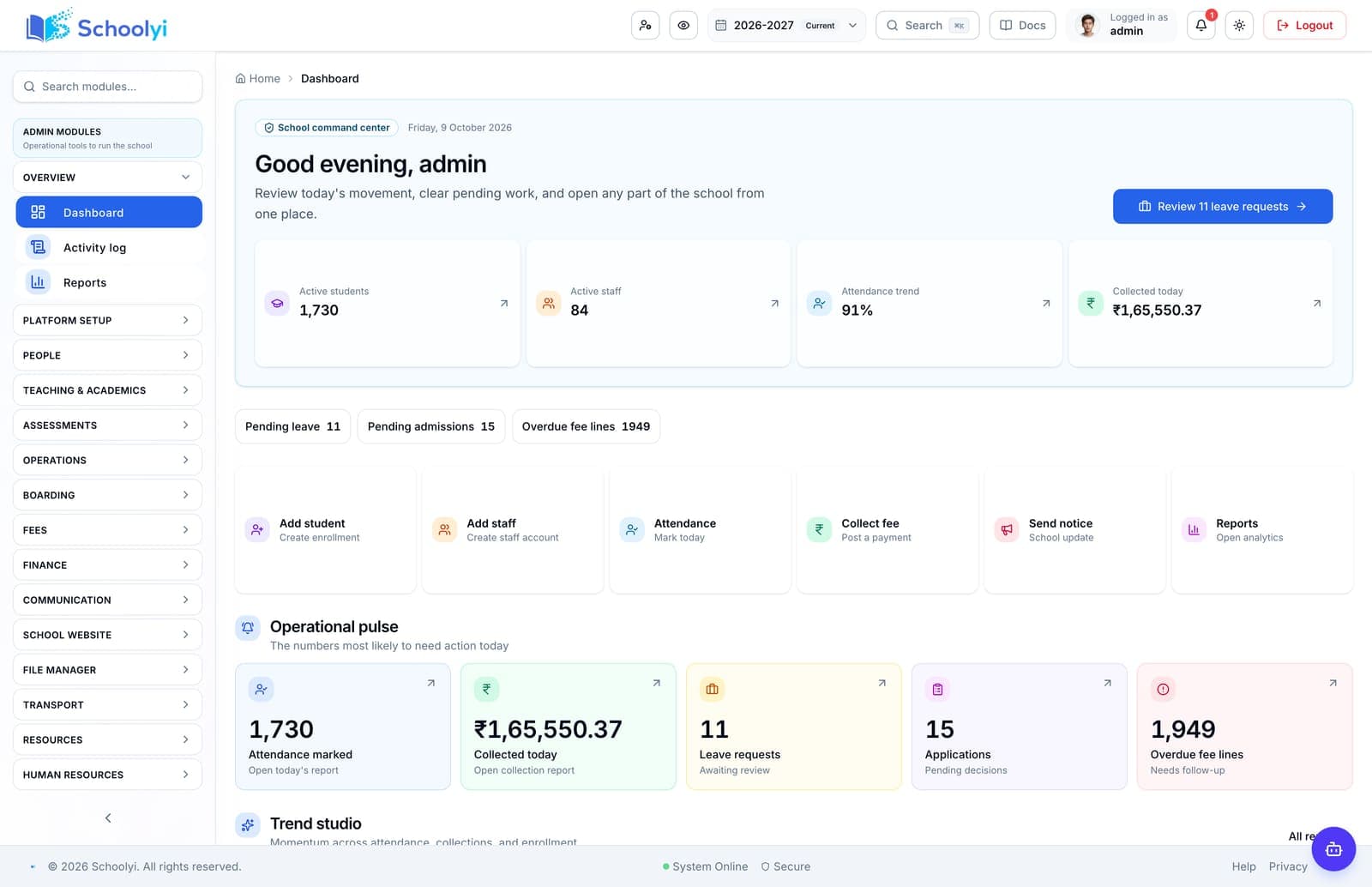
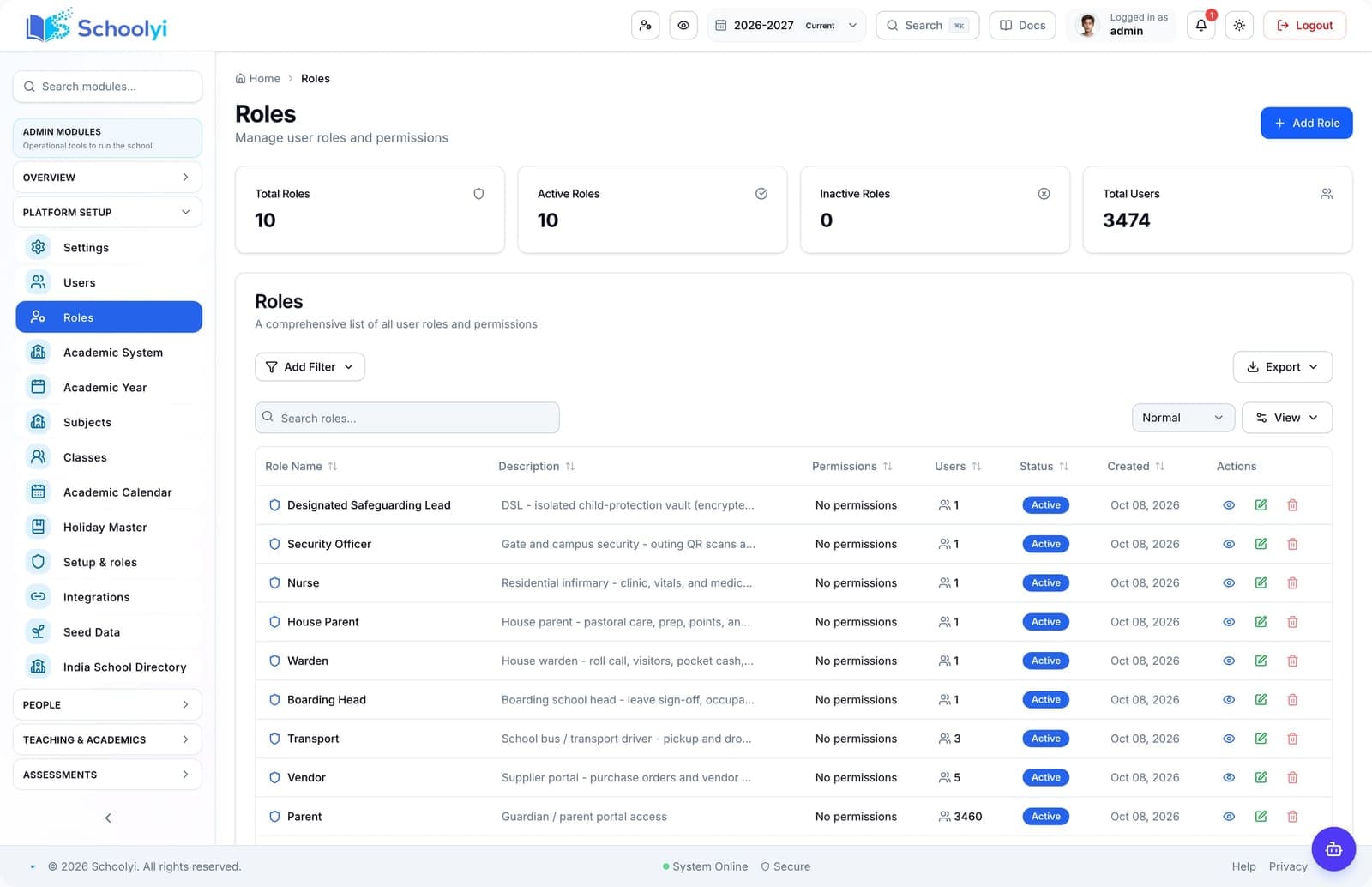
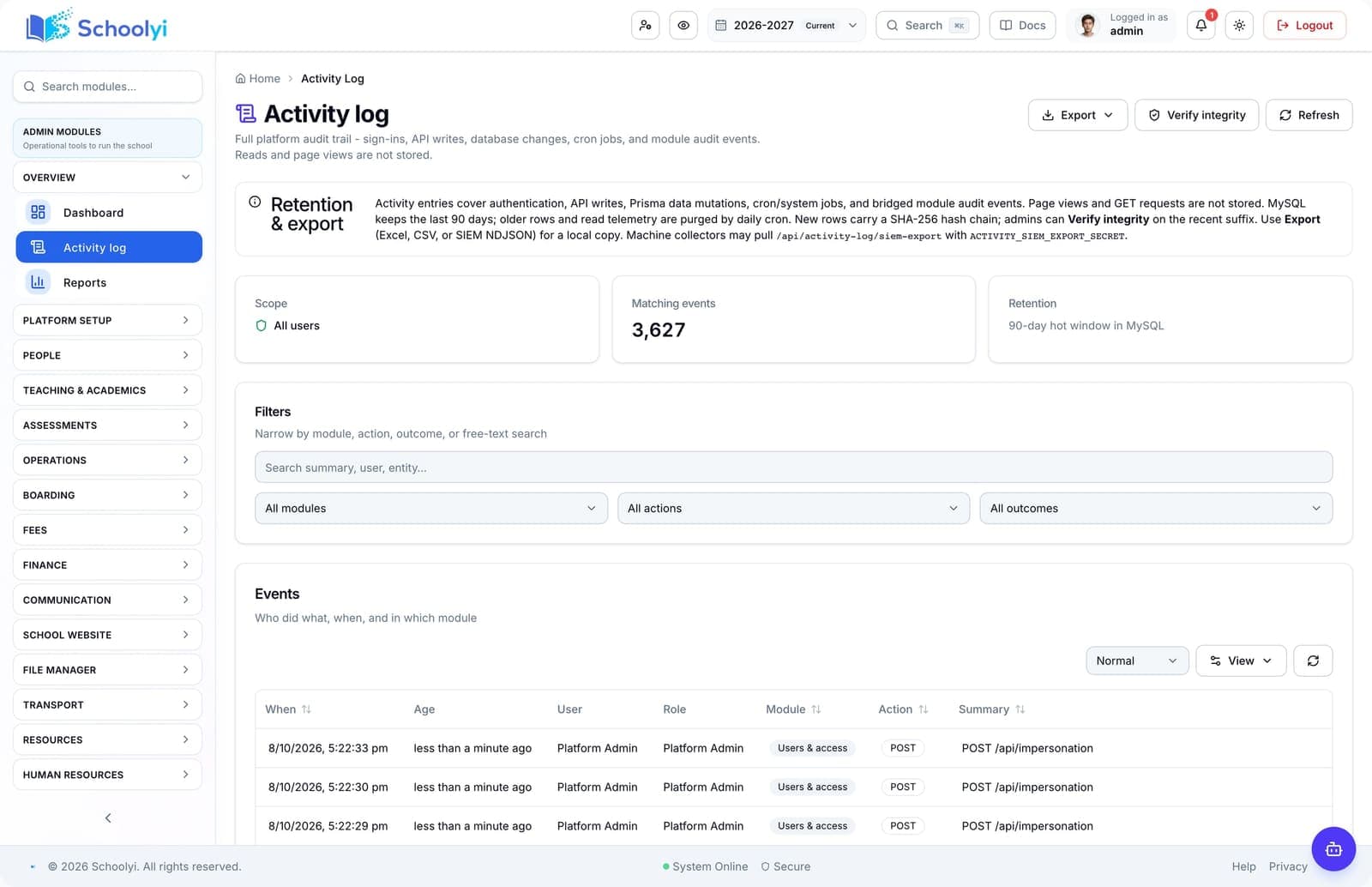
Product screenshots
Captured from a demo school, at a size search engines can fetch. Open the module for the rest of the workflow.
At a glance
Use a practical decision framework for building custom school workflows versus adopting and configuring a maintained platform.
Use the linked product and documentation pages to validate the workflow against your school’s data, roles, policies, and deployment.
Read the supporting materialHow it works
A clear sequence makes ownership, exceptions, and the next system action visible.
Separate genuinely unique school policy from common workflows such as roster, fees, attendance, and exams.
Include security, support, backups, migrations, upgrades, training, and compliance maintenance.
Ask whether the desired difference is a setting, role, template, or real custom engineering.
Document who owns product decisions and operational recovery after launch.
Evaluation framework
A fair comparison tests operating foundations before it scores optional features.
This is a category-level buying guide, not a claim about a named competitor. Confirm current capabilities, pricing, integrations, and support commitments in a dated vendor demonstration and proposal.
| Checkpoint | Question to ask |
|---|---|
| Data ownership | Which team owns the authoritative record? |
| Calendar model | Do dates and working days flow through every workflow? |
| Permissions | Can each role view and publish only what it owns? |
| Rollout evidence | What can the vendor demonstrate with your real handoffs? |
Product truth
Good school software copy should answer who owns the work, what the handoff produces, and which parts still depend on deployment decisions.
This page describes the supported workflow boundary. Confirm configuration, integrations, data, and policy requirements in a representative pilot before committing to production.
Deep dive
Use these details to turn a product page into an implementation conversation.
A capable internal team with unusual requirements may rationally build; it should still budget for long-term operations.
A configurable product reduces time to value for shared school workflows while leaving room for school-specific policy.
Evidence layer
Read the supporting product and implementation material before making a capability claim.
Straightforward answers for visitors evaluating the product.
Configuration and phased module rollout are the default conversation; validate requirements that need new product work.
Test the answer with a representative record and role before making it part of a live term workflow. Capture the expected result and the exception path so the team can verify it after launch.
Use one complete workflow, representative data, role tests, exports, and failure recovery, not only a polished homepage.
Record the responsible administrator and verify the control in the target deployment before production data is loaded. Keep the evidence with the school’s procurement or access-review record.
Continue exploring
Follow the next link based on the question your team needs to answer.
School software procurement questionnaire
A practical questionnaire for evaluating school software across workflows, data, security, implementation, support, and total cost.
Read the pageFirst 90 days of a school software rollout
Sequence foundation data, one visible workflow, role training, and evidence-based expansion instead of attempting a big-bang launch.
Read the page
We can walk through the workflow with your school’s roles, calendar, data, and first-term priorities.
Already using Schoolyi? Sign in